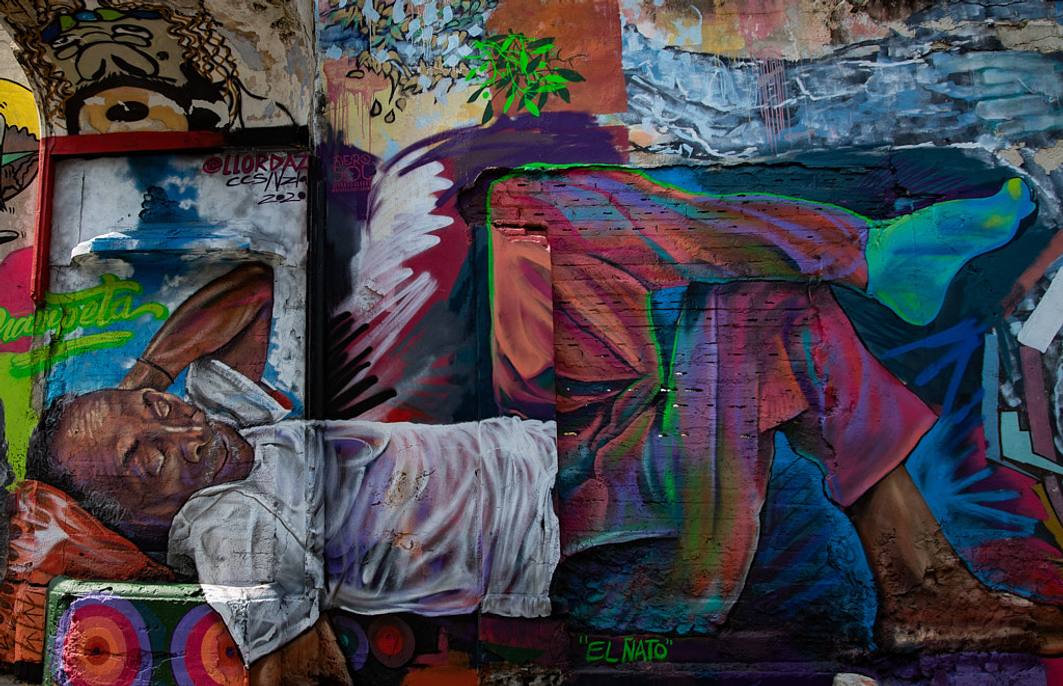
El Ñato is, first and foremost, the story of a man in his seventies whom the real estate frenzy and its corollary, gentrification, have driven out of his home and out of the historic center of Cartagena de Indias, condemning him to life on the streets.
A man I had crossed paths with more than once—without even realizing it—on the outskirts of the walled city. And it wasn’t until several weeks later, while reviewing my photos as the Getsemaní street art festival put him in the spotlight, that I realized it.
Scene I
Here, moving from one neighborhood to another, with nothing but a plastic bag on his back.
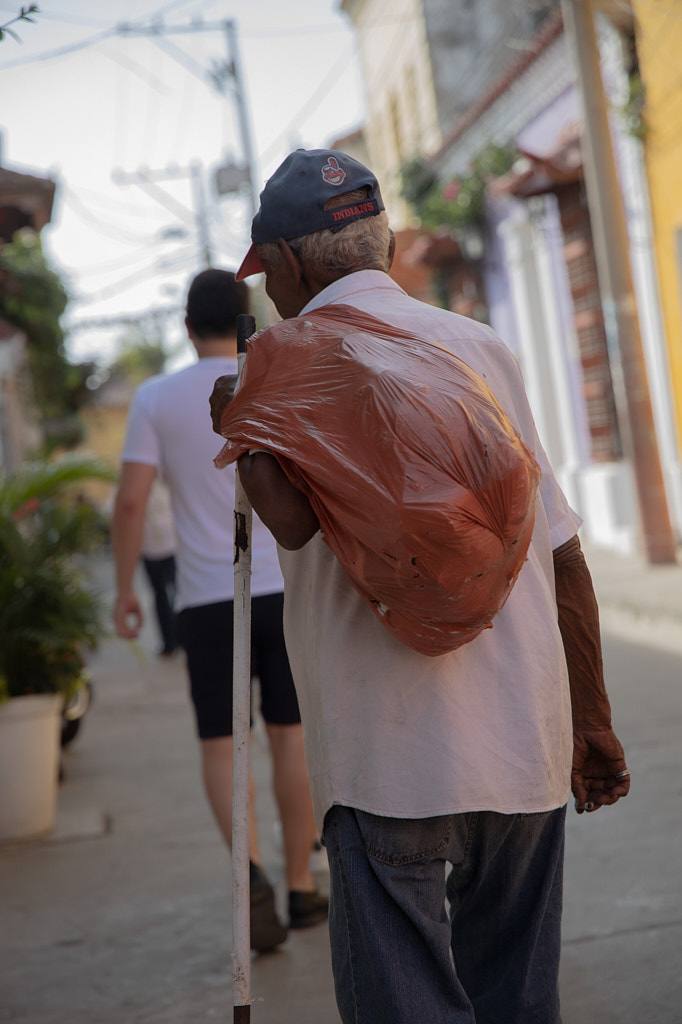
El Ñato on the move
Photograph by ElleDi
Scene II
There, in the La Matuna neighborhood, sitting on the sidewalk at the foot of a mural whose inscription seemed to make him laugh.
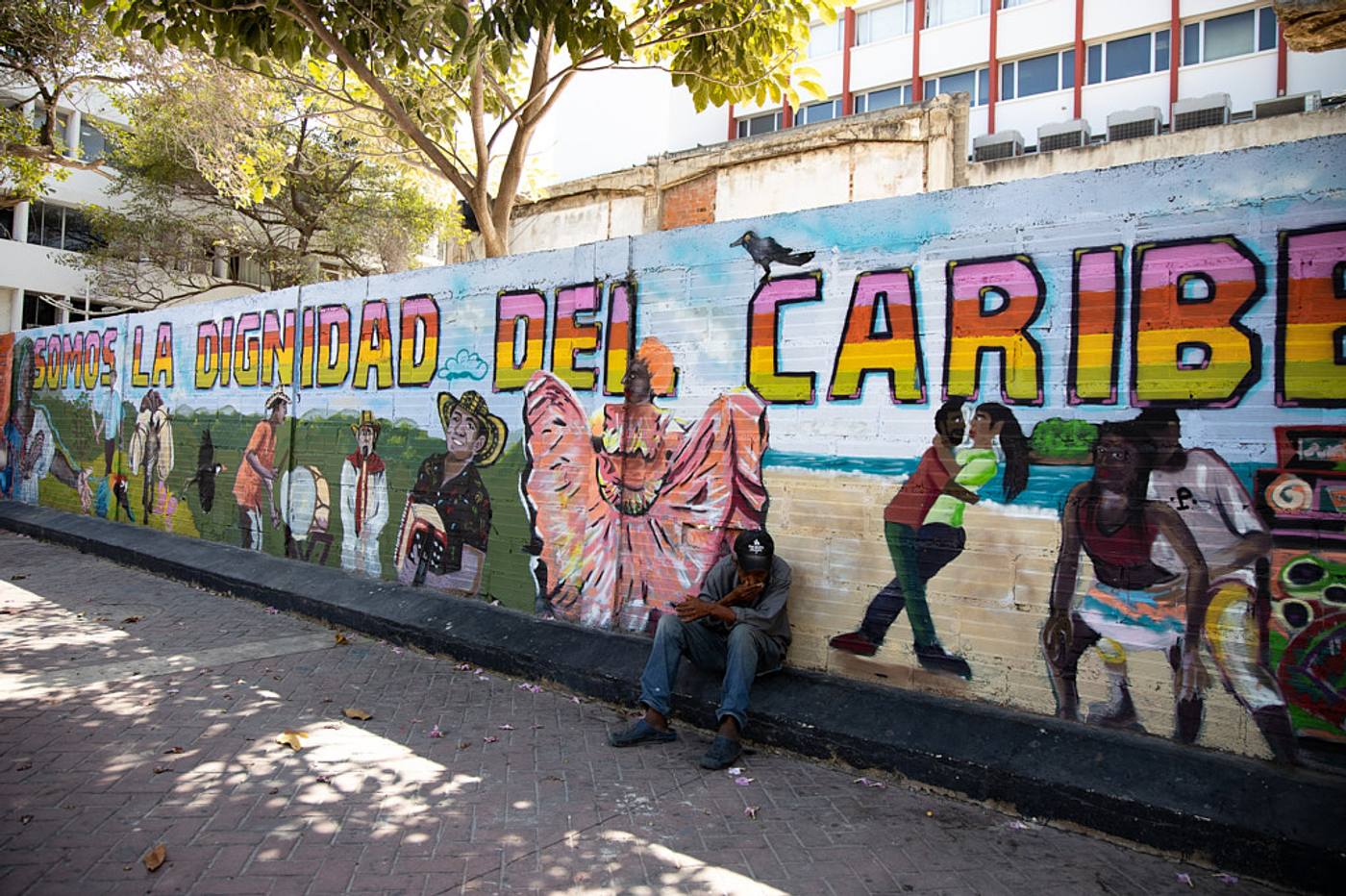
The Dignity of the Caribbean ...
Photograph by ElleDi
Scene III
Or in Getsemani—on Plaza de la Trinidad—where the locals had taken him in, and he was playing a game of dominoes with Daniele, my gaming partner.
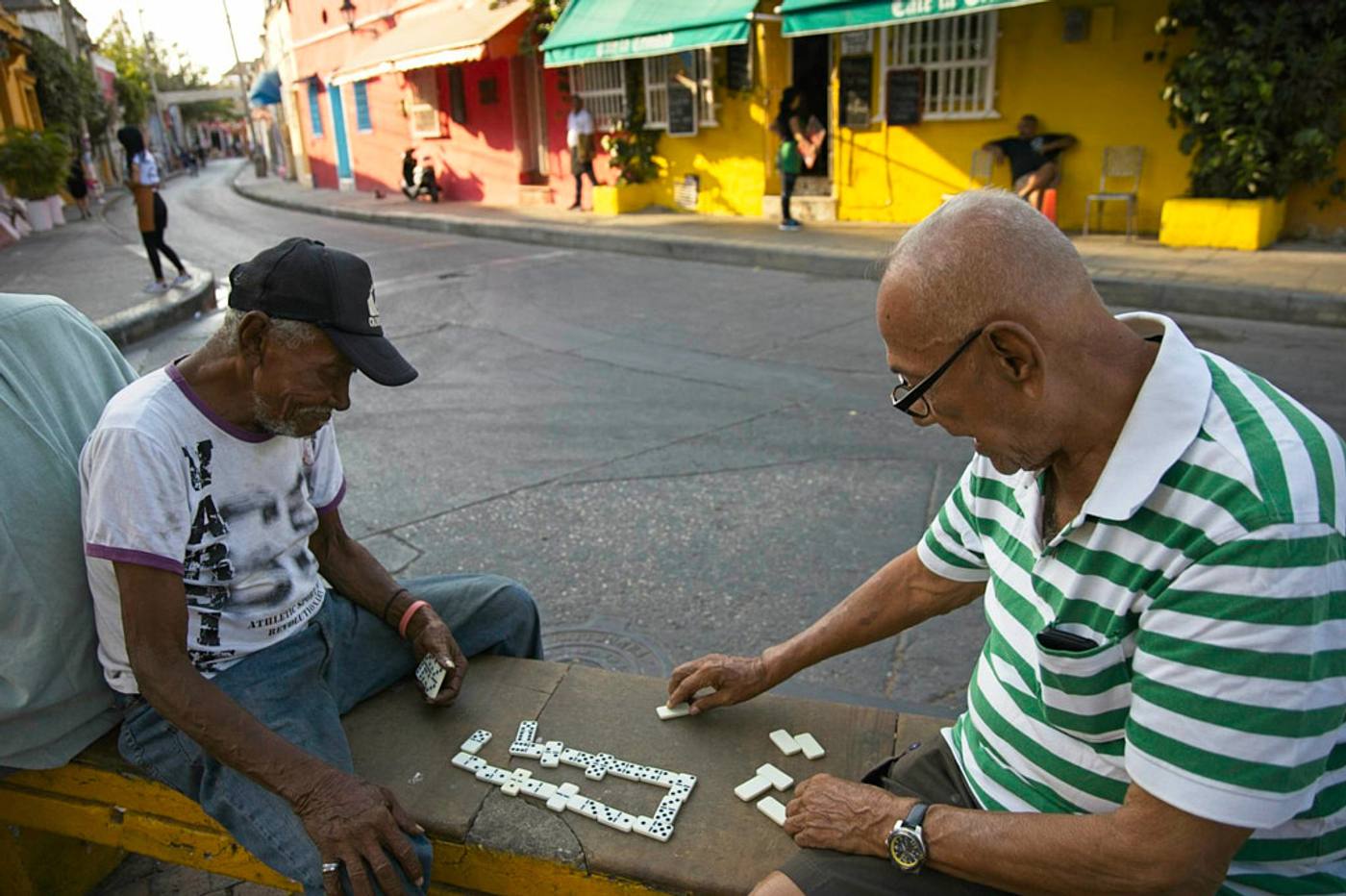
El Ñato and Daniele are playing dominoes near the Plaza de la Trinidad
Photograph by ElleDi
Scene IV
Or lying—for hours on end—on that very same stone bench that would bring a little light back into his life.
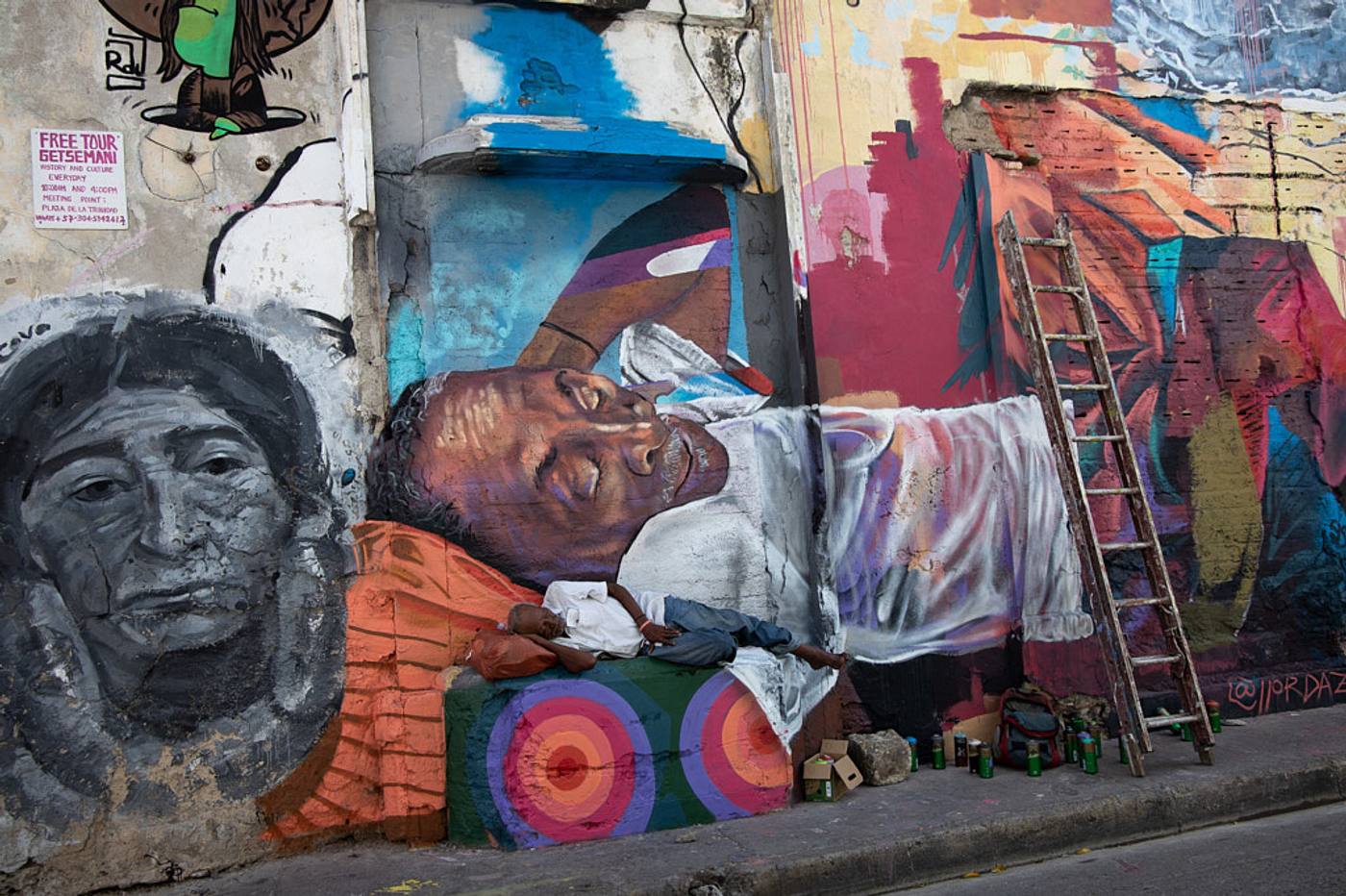
Time stands still, just for a moment.
Photograph by ElleDi
Scene V
But El Ñato is also the story of a human encounter between two people whom nothing destined to cross paths.
Two men from two radically different worlds. One in search of light, the other seeking to fade into the background: Llordaz, a Venezuelan street artist and portraitist, and Don Juan, who became El Ñato.
The former had to learn to win over the latter. The latter had to agree to share this refuge—a place that, suddenly, thanks to art and a touch of humanity, was coming back to life.
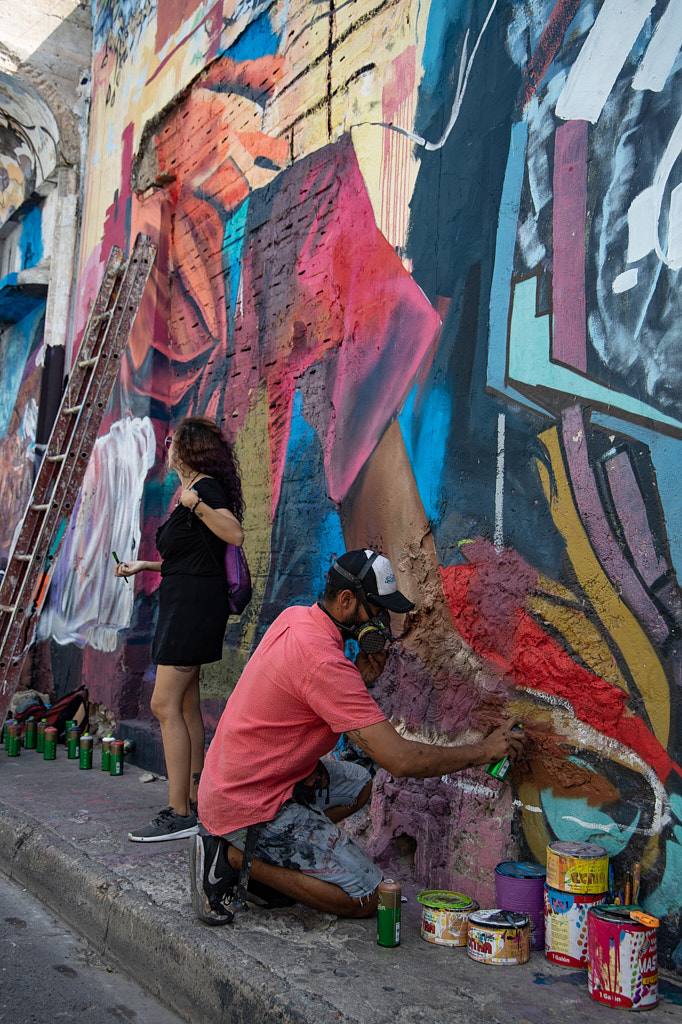
Llordaz at the foot of his work
Photograph by ElleDi
Hats off to the artist!
Last Scene
The irony of the story: no sooner had the street art festival ended than COVID hit Cartagena de Indias with full force. The walled city found itself forced to turn inward—once again—and lose its economic lifeblood: the very mass tourism that had helped drive Juan from his home.
While the whole world went into lockdown, Juan, for his part, remained right there: battered but not defeated. The ultimate irony: when the city’s gates reopened, it was his face that hordes of tourists came to admire on La Sierpe Street, where he now took center stage on the mural bearing his name.
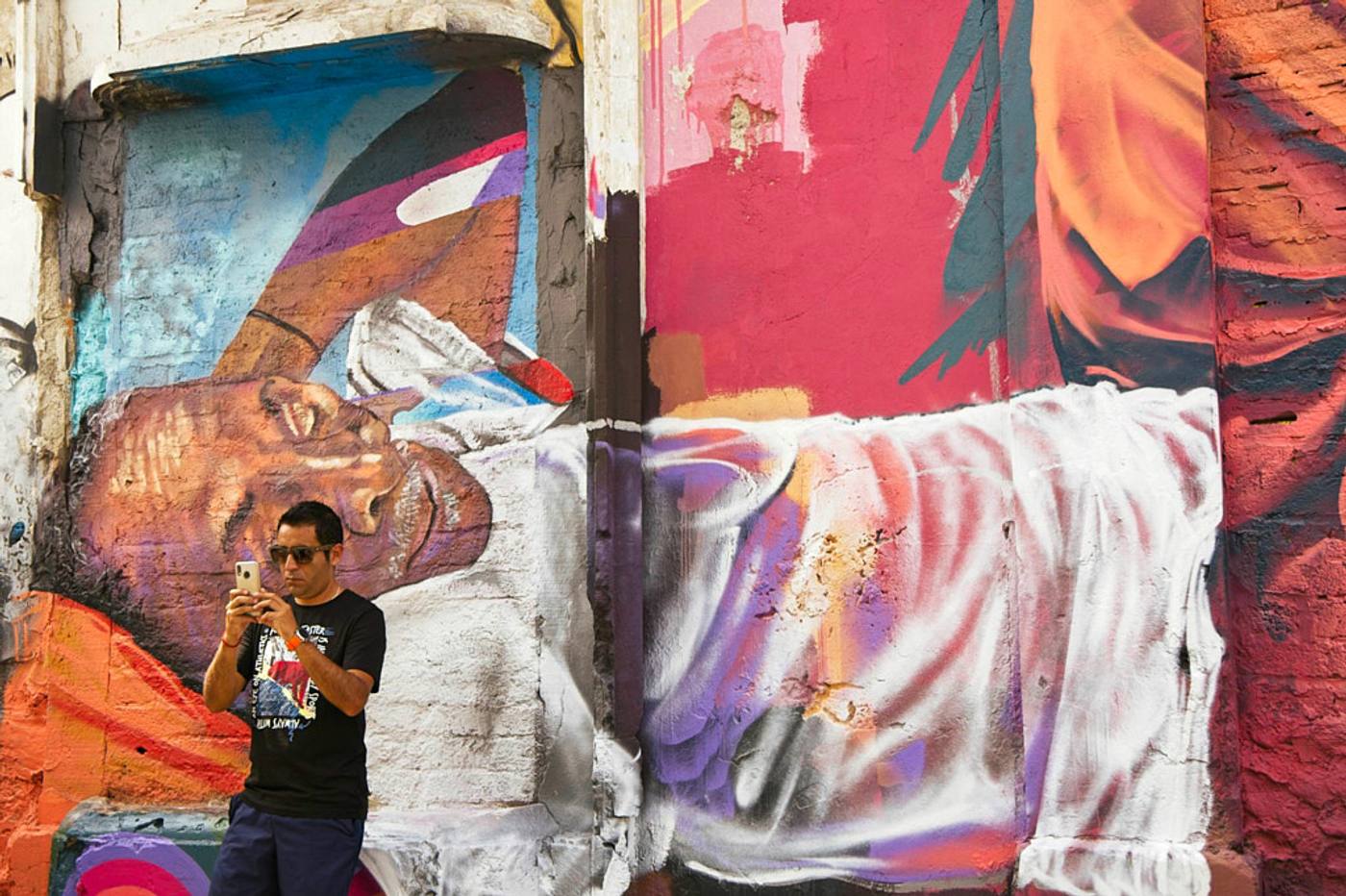
A tourist in Selfie-mode in front of the El Ñato mural
Photograph by ElleDi
Enjoy this article?
Subscribe to the Journal to receive new essays and behind-the-scenes writing directly.