

Intro
“We don’t give thanks to the bird we put in a cage; we distort its nature,” Erika had said (in Le Tournant). I am among those who share this view. Especially in a country as beautiful as Colombia—ranked first in the world for bird diversity, with 1,900 species, more than 80 of which are endemic. A country where birds are everywhere—in the air, on walls... or on people’s plates. A country that had almost made me forget that their wings could be clipped.
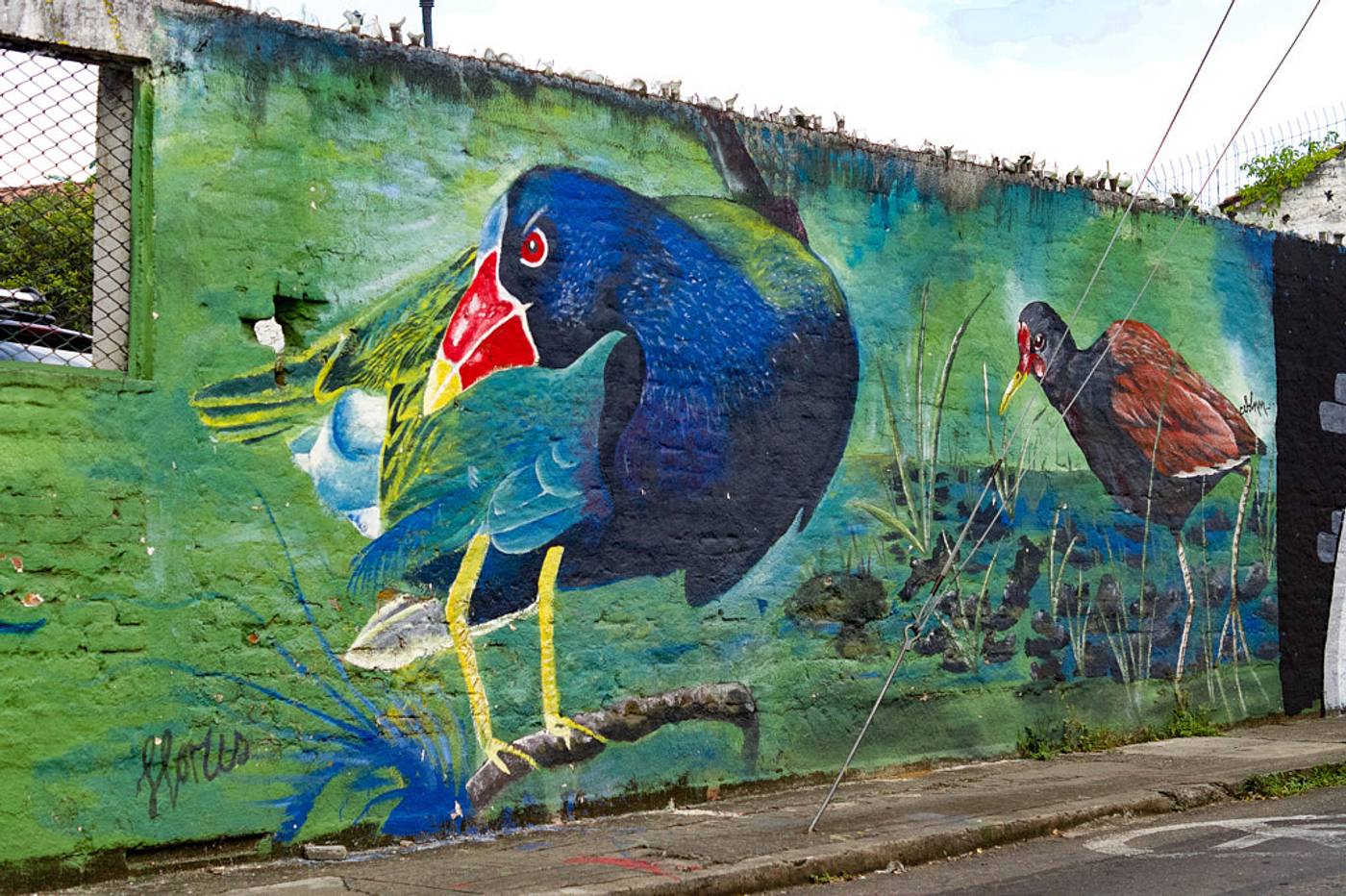
A mural depicting two birds, one of which is blue and shown in close-up, on a street in Cali.
Photograph by ElleDi
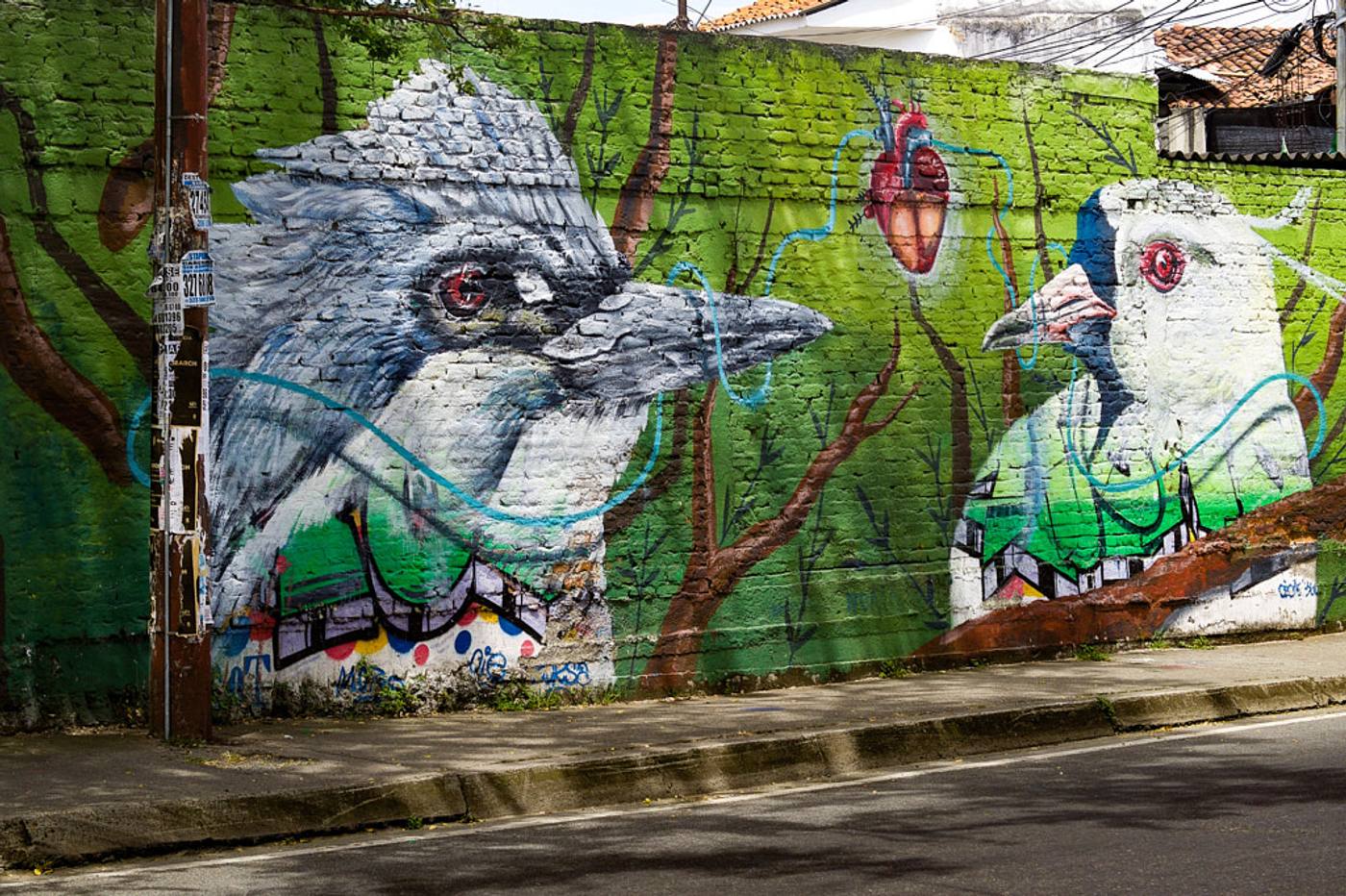
A mural depicting two bird heads facing each other on a street in Cali.
Photograph by ElleDi
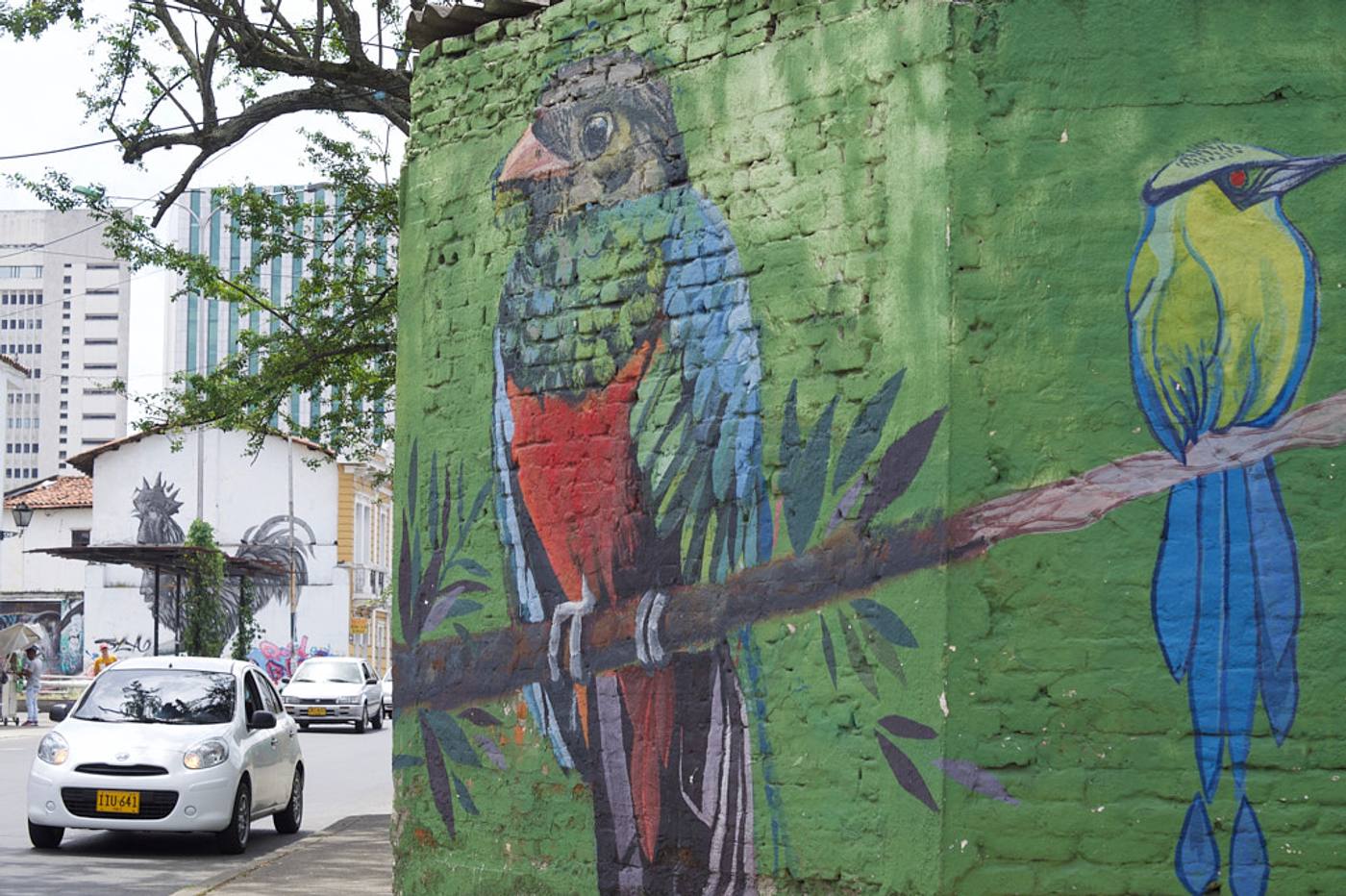
A mural depicting two birds back-to-back—on a street in Cali—with the larger one towering over the street.
Photograph by ElleDi
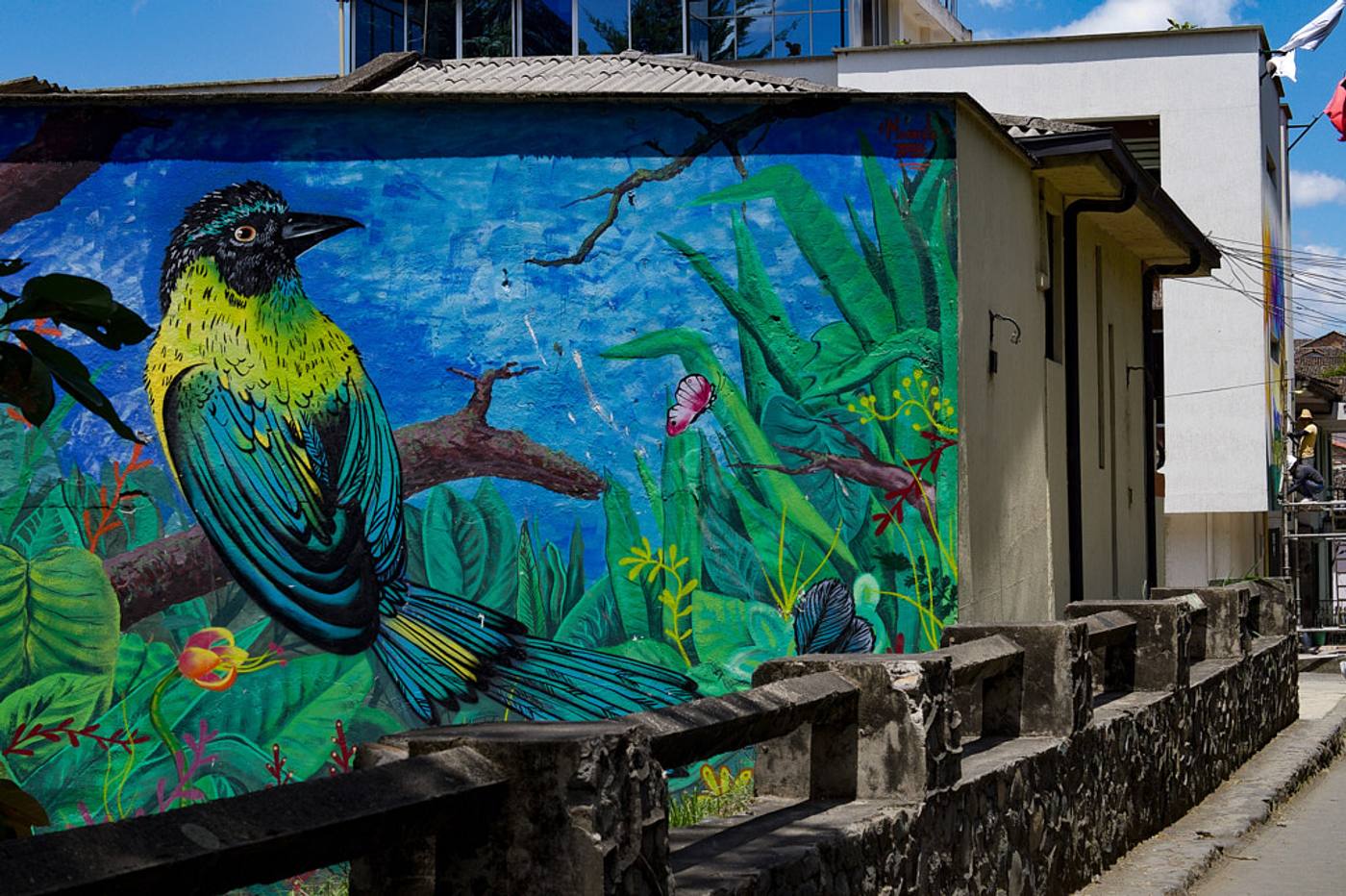
A mural depicting a bird on a street in Popayán
Photograph by ElleDi
Bird in a cage
One day, on my way back from Cartagena’s historic center, as I was walking through Getsemaní, a bird’s song caught my attention from behind the bars of a neighborhood grocery store’s window. I paid attention to it and stopped for a moment, shocked to discover a Canario Costeño—commonly called a “canary” because of its bright yellow plumage and melodious song, although it is actually a passerine bird of the Thraupidae family—locked in a cage hanging near the entrance. It is a protected species, and it is, moreover, strictly forbidden to keep it in a cage.
“¡Qué pena!” I thought to myself, saddened.
Man in a cage
So when, two weeks later, chance led me to walk past that magnificent macaw—just as the owner of the place was standing behind that wire-mesh door—the sight charmed me and made me smile.
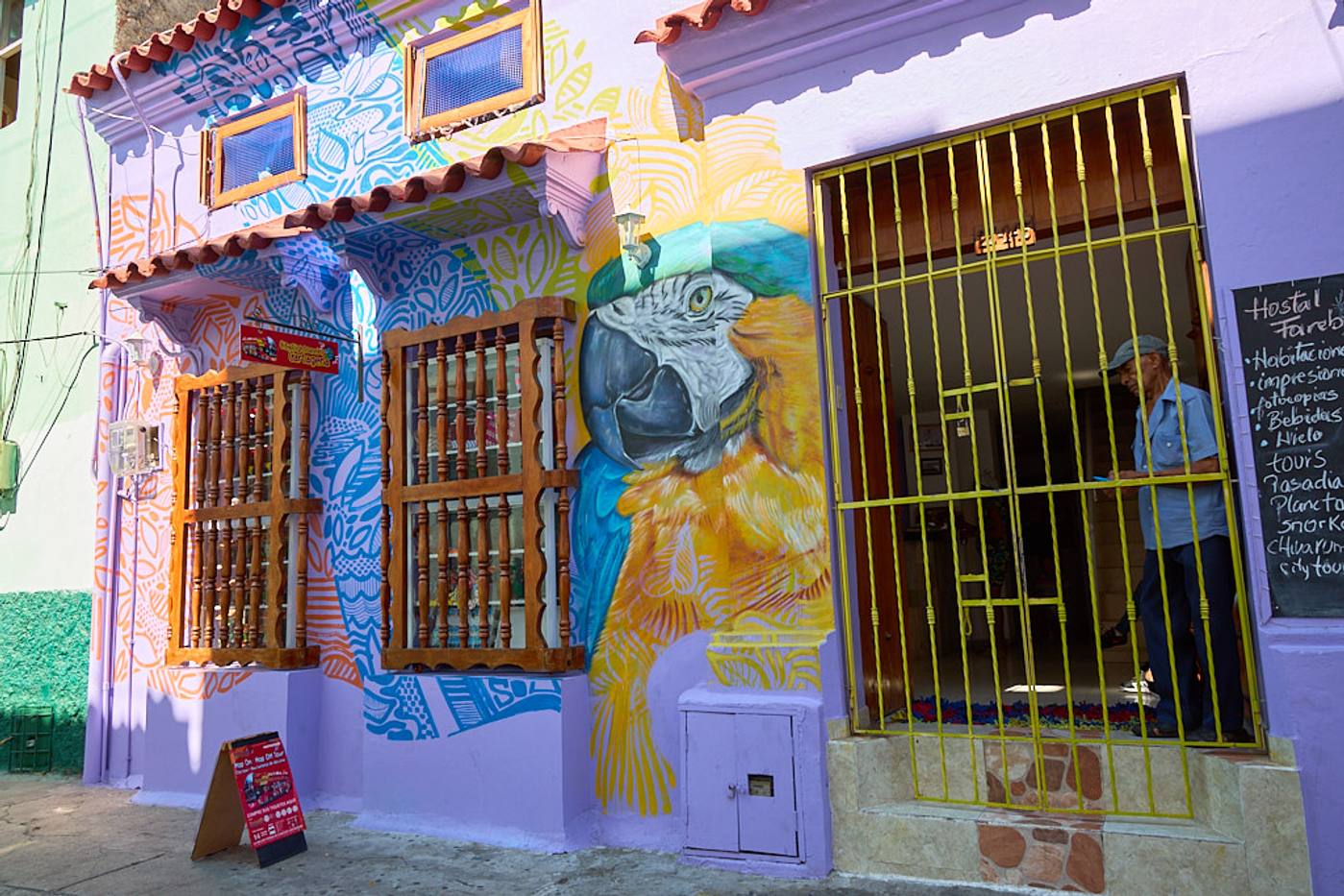
A man in a golden cage. Backlash?
Photograph by ElleDi
“Sweet revenge!” I thought immediately.
Enjoy this article?
Subscribe to the Journal to receive new essays and behind-the-scenes writing directly.